
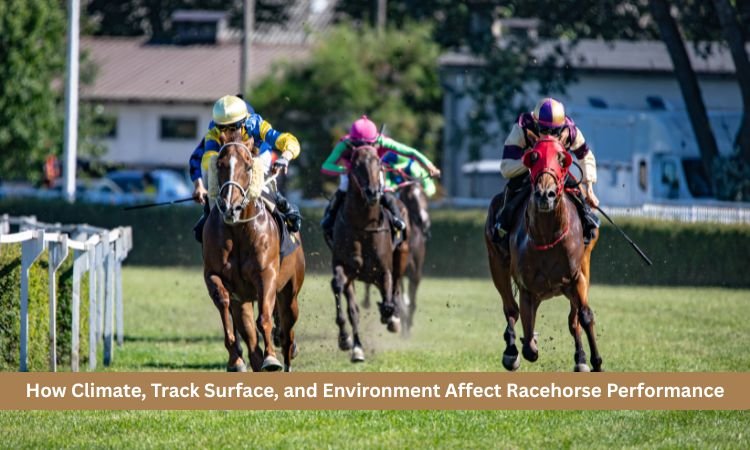
A racehorse’s performance is shaped by far more than training and genetics. Climate, track surface, and the surrounding environment directly influence a horse’s speed, stamina, behavior, recovery, and overall racing capability. Even the most talented Thoroughbred can underperform if the environmental conditions don’t match its natural strengths.
Understanding these factors is essential for owners, trainers, breeders, and anyone preparing horses for competitive racing. In this comprehensive guide, we’ll explore how each element affects performance, and why predicting a horse’s adaptability can give you an advantage in selecting or training future champions.
How Climate Affects Racehorse Performance
Climate plays a huge role in determining how a horse performs on race day. Horses react differently to heat, humidity, cold, and varying weather patterns.
A. Heat and Humidity
High temperatures and humidity can:
- Increase fatigue
- Raise heart rate
- Slow recovery
- Reduce stamina
- Increase dehydration risk
Racehorses require efficient thermoregulation. Hot climates (Dubai, Chennai, Hyderabad) challenge this ability, especially during sprint and long-distance races.
Horses suited for hot climates generally show:
- Better heat tolerance
- Lower stress response
- Quick hydration recovery
- Natural stamina
B. Cold Weather Conditions
Cold climates can:
- Tighten muscles
- Reduce flexibility
- Slow warm-up efficiency
- Increase injury risk
However, cold weather helps some horses maintain stamina better due to slower fatigue buildup.
Also Read: The role of nutrition in racehorse performance
Cold-weather-adapted horses often have:
- Greater endurance
- Stable breathing rhythm
- Consistent pace over long distances
C. Sudden Weather Changes
Racehorses are sensitive to environmental changes such as:
- Sudden rain
- Wind shifts
- Temperature drops
- High humidity spikes
These fluctuations can drastically affect performance, especially horses with nervous or sensitive temperaments.
Also Read: Common Mistakes Horse Owners Make When Choosing a Racehorse
Track Surface and Its Impact on Performance
Every track surface demands a different skill set. Some horses excel on turf; others prefer dirt or synthetic tracks. Understanding this helps when selecting or preparing a horse for certain events.
A. Turf Tracks
Characteristics:
- Softer surface
- Requires agility and balance
- Slows down heavier horses
- Favors horses with flexible joints and smooth gait
Best suited for:
- Horses with long strides
- Horses with strong hind limbs
- Horses with natural rhythm and balance
Also Read: The 5 Best Horse Racing Tracks in India
B. Dirt Tracks
Characteristics:
- Firmer surface
- Faster but heavier impact
- Requires power and explosive speed
Best suited for:
Horses with muscular build
Strong front-leg propulsion
Horses with high early speed
However, dirt tracks increase the risk of:
- Leg strain
- Hoof injuries
- Dust-related breathing stress
Also Read: The 5 Best Horse Race Tracks in UAE
C. Synthetic Tracks (Polytrack, Tapeta)
Characteristics:
- Combination of sand, fiber, and rubber
- More consistent performance
- Safer for joints
- Ideal for unpredictable climates
Best suited for:
- Horses needing shock absorption
- Training young or sensitive horses
- Long-term conditioning
Synthetic surfaces often produce more reliable times and fewer injuries.
How the Environment Influences Racehorse Behavior and Performance
Beyond climate and track types, the surrounding environment also plays an important role in shaping race performance.
A. Altitude
Higher altitudes reduce oxygen levels, causing:
- Increased heart rate
- Faster fatigue
- Slower recovery
However, training at altitude can boost long-term stamina and lung capacity.
Also Read: What makes a true derby horse?
B. Noise, Crowd, and Stress Levels
Emotional stability determines how well a horse handles:
- Loud crowds
- Race-day tension
- Pre-race parades
- Starting gate pressure
Nervous or over-sensitive horses may lose focus even if they have superior physical abilities.
C. Travel & New Environments
Transporting a horse to new regions (city to desert, cold to humid climates, turf to dirt tracks) affects:
- Hydration
- Appetite
- Behavior
- Muscle adaptation
Horses with adaptable temperaments adjust faster and perform better.
D. Stable Conditions
Factors such as:
- Stall ventilation
- Bedding quality
- Temperature control
- Daily routine consistency
all influence mental and physical readiness.
Also Read: Top 6 Tips for Buy a Racing Horse
Why Some Horses Perform Better in Certain Climates and Tracks
Because every horse has unique natural traits:
- Body structure
- Bone density
- Hoof type
- Breathing efficiency
- Emotional temperament
- Recovery rate
These differences determine which environment suits them best.
This is why an elite horse in Mumbai may struggle in Dubai, or a turf champion may underperform on dirt tracks.
Understanding these natural tendencies early is key to success.
How Horse Astrology Helps Predict Climate, Track, and Environment Adaptability
This is where horse astrology and Zodiac Gallop’s HAT Theory (Horse Astro Technique) become powerful tools.
While physical tests measure visible traits, astrology examines inherent qualities that are often hidden, especially temperament, adaptability, resilience, and environmental compatibility.
What Horse Astrology Reveals
By analyzing a horse’s birth chart, experts can understand:
Natural stamina and heat tolerance
Some horses are astrologically aligned with fiery elements, giving them strong performance in hot climates.
Emotional stability in high-pressure environments
Astrological placements reveal how a horse reacts to noise, crowd, and unpredictability.
Adaptability to new track surfaces
Certain planetary combinations indicate flexibility and quick adjustment.
Endurance vs. speed inclination
Charts highlight whether a horse is better suited for long races or fast sprints.
Climate and track compatibility
Astrological markers show which terrain and weather conditions are naturally favorable.
Also Read: What Is a Horse Birth Chart? A Complete Guide to Horse Astrology
How Zodiac Gallop Uses HAT Theory to Enhance Racehorse Selection
Developed by Sudheer Chauhan, HAT Theory blends:
- Vedic astrology
- Equine behavioral science
- Race-environment analysis
This helps owners and trainers choose horses aligned with the ideal climate, training method, and track type.
Zodiac Gallop Helps You Understand:
1. Which climate your horse will adapt to naturally
Heat-tolerant or cold-weather performer?
2. Which track surface suits its temperament and structure
Turf? Dirt? Synthetic?
3. How it will behave under stress
Calm or reactive?
4. Ideal training environment
Quiet stables? Busy arenas? Specific race circuits?
5. Long-term compatibility with major racing locations
India, UAE, UK, USA, Australia, each area has different conditions.
This reduces trial-and-error and increases the chances of shaping a true Derby-level horse.
Conclusion: Building a Racehorse That Thrives in the Right Environment
A racehorse’s success depends on far more than physical ability. Climate, track surface, and environmental factors shape performance every single day. Understanding these elements allows you to:
- Choose the right horse
- Train more effectively
- Reduce injuries
- Prepare strategic race plans
- Build long-term performance consistency
Traditional evaluation provides half the picture. When combined with birth chart analysis and Zodiac Gallop’s HAT Theory, owners and trainers gain a deeper understanding of a horse’s natural strengths and limitations.
By respecting both science and intuitive insight, you can select, train, and race horses with greater clarity, pride, and purpose.
Let the stars guide your next Derby success.
📩 Contact Zodiac Gallop for personalized horse race analysis and temperament insights: info@zodiacgallop.com