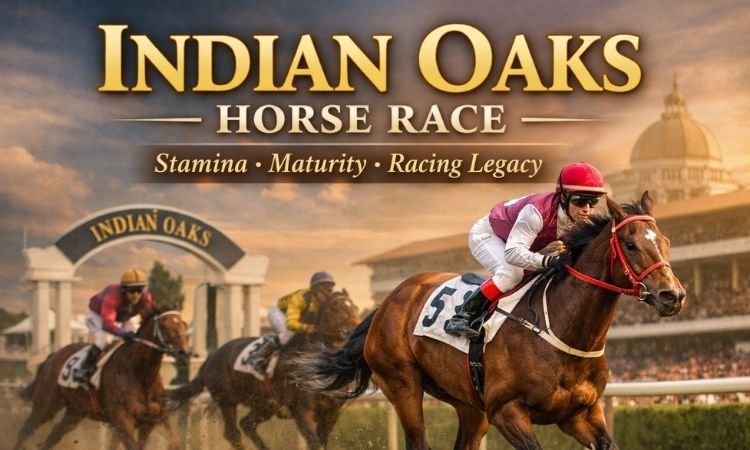
The Indian Oaks is one of the most respected and meaningful races in Indian thoroughbred racing. It is not just another event on the racing calendar but a classic race that helps define the future of young female racehorses. For owners, breeders, stud farms, and racing professionals, the Indian Oaks represents a benchmark of stamina, maturity, and long-term racing potential rather than short-term speed.
Understanding the Indian Oaks horse race helps racing stakeholders appreciate why certain fillies are valued highly, how classic races shape racing careers, and what truly matters in thoroughbred development.
What Is the Indian Oaks Horse Race?
The Indian Oaks is a classic horse race conducted exclusively for 3-year-old thoroughbred fillies (female racehorses). Unlike sprint races that focus primarily on early speed, the Indian Oaks is designed to test a filly’s endurance, physical balance, and mental composure over a longer distance.
In simple terms, the Indian Oaks race exists to identify fillies that are not just fast, but capable of sustaining performance under pressure, managing race rhythm, and completing a demanding distance with strength and consistency.
Because of this, the Indian Oaks is often seen as a career-defining race for young fillies in Indian horse racing.
Also Read: Indian Derby Winners List (2015–2025)
Why the Indian Oaks Is Important in Thoroughbred Racing
The role of the Indian Oaks in thoroughbred racing goes far beyond determining a single race winner. It acts as a filtering race, separating early bloomers from genuinely strong, classic-quality horses.
In thoroughbred racing, not every horse is built for long-distance or classic racing. The Indian Oaks highlights:
- Which fillies possess true stamina
- Which horses can maintain focus and balance under race pressure
- Which individuals show maturity at the right stage of development
Because fillies compete at a crucial age, performance in the Indian Oaks often influences future race planning, reputation, and long-term value within the racing ecosystem.
Indian Oaks as a True Test of Stamina and Mental Maturity
One of the defining features of the Indian Oaks horse race is its emphasis on stamina over speed. While speed is important, it is not enough on its own to succeed in this race.
Fillies competing in the Indian Oaks must demonstrate:
- The ability to settle early in the race
- Efficient energy distribution across the distance
- Mental calmness in competitive environments
- Strong finishing ability without exhaustion
This is why the Indian Oaks is often referred to as a test of mental and physical maturity. Horses that perform well here are usually those that have developed steadily rather than those rushed into competition too early.
Also Read: The 5 Best Horse Racing Tracks in India
How the Indian Oaks Influences a Filly’s Racing Career
Performance in the Indian Oaks plays an important role in shaping a filly’s future in racing. A strong run in this race often signals that the horse is suitable for:
- Longer-distance races
- Consistent participation in classic events
- Structured racing campaigns rather than frequent starts
Even fillies that do not win the Indian Oaks but perform competitively are often considered reliable long-term prospects, especially when they show composure and stamina throughout the race.
For owners and trainers, this race provides valuable insight into how a filly should be managed going forward.
Also Read: The role of nutrition in racehorse performance
Indian Oaks from a Stud Farm and Breeder Perspective
From a stud farm and breeder’s point of view, the Indian Oaks holds special importance. While breeding focuses on bloodlines and physical traits, performance in classic races like the Indian Oaks reflects how those qualities translate into real racing conditions.
Stud farms value Indian Oaks-level performances because they indicate:
- Balanced genetic traits suited for endurance
- Proper physical development
- Mental strength inherited through bloodlines
It is important to note that the Indian Oaks does not guarantee future success in every case, but it adds credibility to a filly’s racing and breeding profile.
Common Traits Seen in Successful Indian Oaks Fillies
Over the years, certain traits have been commonly observed in fillies who perform well in the Indian Oaks. These traits are not limited to physical ability alone.
Successful Indian Oaks fillies often show:
- Natural stamina and efficient movement
- Calm and focused temperament
- Ability to handle race pressure without panic
- Consistent training response
- Gradual development rather than early burnout
These qualities reinforce why the Indian Oaks is considered a classic race for serious evaluation, not a sprint for instant results.
Also Read: How to choose a Thoroughbred
Preparation for the Indian Oaks: More Than Just Training
Preparing a filly for the Indian Oaks involves more than conditioning and fitness work. Because the race tests endurance and maturity, preparation must be carefully timed and balanced.
Key aspects of Indian Oaks preparation include:
- Managing workload to avoid fatigue
- Allowing adequate recovery between races
- Ensuring the filly peaks at the right stage of the season
- Avoiding unnecessary early pressure
Poor timing or over-racing before the Indian Oaks can negatively affect performance, even in talented horses.
Also Read: Top 6 Tips for Buy a Racing Horse
Understanding Performance Timing and Temperament
While pedigree, training, and race planning remain the foundation of success, some owners and breeders also look deeper into performance timing and temperament patterns when managing classic-level fillies.
This is where horse astrology, when used responsibly, acts as a supporting evaluation tool, not a prediction system. It focuses on understanding:
- Natural performance cycles
- Mental readiness under pressure
- Energy distribution across demanding phases
Frameworks such as HAT Theory (Horse Astro Technique) are used post-birth to study temperament and timing tendencies. This approach does not replace traditional racing practices or veterinary care. Instead, it helps some racing professionals reduce guesswork and protect long-term performance, especially for fillies targeting endurance-based races like the Indian Oaks.
Also Read: Common Mistakes Horse Owners Make When Choosing a Racehorse
Conclusion: What the Indian Oaks Truly Represents
The Indian Oaks horse race represents patience, preparation, and true thoroughbred quality. It is not about instant success but about identifying fillies capable of sustaining performance under classic racing conditions.
For stud farms, breeders, and racehorse owners, the Indian Oaks serves as a valuable reference point, highlighting which horses possess the stamina, temperament, and maturity required for long-term success in thoroughbred racing.
When approached with discipline and understanding, the Indian Oaks becomes more than a race, it becomes a measure of future potential and racing legacy.
Frequently Asked Questions (FAQs)
1. What is the Indian Oaks horse race?
The Indian Oaks is a classic race conducted for 3-year-old thoroughbred fillies, designed to test stamina, maturity, and long-distance racing ability.
2. Why is the Indian Oaks important in horse racing?
It helps identify fillies with endurance, mental strength, and long-term racing potential rather than just early speed.
3. Is the Indian Oaks only about speed?
No. The race focuses more on stamina, balance, and consistency than pure speed.
4. How does the Indian Oaks affect a filly’s future career?
A strong performance often influences future race planning and enhances a filly’s long-term racing profile.
5. Can performance timing analysis help with Indian Oaks preparation?
Yes, when used as a supporting tool, timing and temperament analysis can help owners and trainers plan workloads and peak performance more effectively.