
Derby Horse

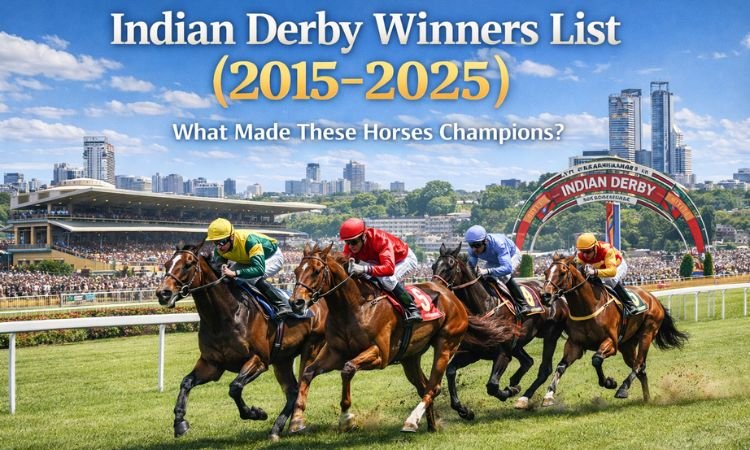
Indian Derby Winners List (2015–2025): What Made These Horses Champions?
Derby Horse

Indian Derby Winners List (2015–2025): What Made These Horses Champions?

The Indian Derby is more than a prestigious race on the Mumbai racing calendar. It is a defining moment that tests a horse’s mental strength, stamina, maturity, and timing. Every year, several well-bred and well-trained horses enter the Derby season, but only one manages to rise above pressure and expectation to claim victory. For racing owners, stud farm custodians, and trainers, the real value of the Indian Derby lies not just in celebration, but in understanding patterns. Derby winners leave behind important clues, about preparation, temperament, and peak timing, that help shape better decisions for the future. This looks closely at Indian Derby winners from 2015 to 2025, not merely as names on a list, but as examples of how championship performance is built. Why the Indian Derby Truly Matters The prestige of Mumbai racing & the Indian Derby Run at Mahalaxmi Racecourse, the Indian Derby is regarded as the ultimate test for four-year-old thoroughbreds in India. The race demands: Winning the Derby places a horse in a rare category associated with honor, breeding value, and long-term recognition. Also Read: The 5 Best Horse Racing Tracks in India Why Derby winners are studied, not just celebrated Seasoned owners and breeders understand one thing clearly, Derby success is rarely accidental. Behind every winner is a precise alignment of physical readiness, mental balance, training rhythm, and environmental comfort. Studying past winners helps identify what “right timing” truly looks like in elite racing. Indian Derby Winners (2015–2025) Below is a factual reference table to set context for deeper analysis. Year Winning Horse Trainer Jockey Feb 02, 2025 Ranquellino Darius Byramji A Sandesh Feb 04, 2024 Enabler M Narredu Yash Narredu Feb 05, 2023 Mirra Arjun Mangalorkar Anthony Raj S Feb 06, 2022 Zuccarelli P Shroff Trevor Mar 28, 2021 Immortality P Shroff Suraj Narredu Feb 02, 2020 War Hammer Prasanna Kumar Suraj Narredu Feb 03, 2019 Star Superior Rajesh Narredu Suraj Narredu Feb 04, 2018 Rochester S K Sunderji C S Jodha Feb 05, 2017 Hall of Famer S Padmanabhan David Allan Feb 07, 2016 Desert God S Padmanabhan David Allan While trainers and jockeys change, certain performance patterns repeat consistently among winners. Also Read: Top 6 Tips for Buy a Racing Horse What Do These Derby Winners Have in Common? Temperament under pressure Indian Derby winners display calm authority rather than nervous energy. They handle large crowds, long waiting periods, and mid-race tactical changes without losing focus. This level of composure often separates champions from horses that look brilliant in smaller races. Stamina over raw speed Derby winners are rarely the fastest sprinters. Instead, they show: This reflects maturity and energy management rather than explosive speed alone. Also Read: How to choose a Thoroughbred Mental maturity at the right time Perhaps the most important factor is the timing of maturity. These horses reach mental and physical readiness exactly when the Derby demands it, not months earlier and not too late. Why Some Derby Winners Fade After One Big Win Not every Derby champion goes on to dominate long-term. This is often due to factors unrelated to ability. Overtraining after success High expectations following a Derby win can lead to excessive racing or intense training schedules, disrupting a horse’s natural recovery rhythm. Poor timing decisions Ignoring rest cycles or seasonal suitability often results in inconsistent performances, even in talented horses. Emotional and mental burnout Horses experience psychological fatigue. Continuous exposure to pressure without adequate recovery affects confidence and willingness. Track and condition mismatch Some Derby winners excel under specific track conditions. When forced into unsuitable surfaces or climates, performance naturally declines. Also Read: The role of nutrition in racehorse performance The Hidden Factor Behind Derby Success Beyond pedigree and training Pedigree defines potential and training shapes discipline, but neither fully explains why one horse peaks perfectly on Derby day while another with similar credentials does not. Timing and temperament True champions show emotional balance, internal rhythm, and confidence under expectation. These qualities cannot be forced; they must be respected and aligned. How Horse Astrology Explains These Patterns (In a Practical Way) When Derby winners are studied closely, success appears less random. These horses peak at the right age, handle pressure effectively, and perform best when conditions align. Horse astrology approaches this from a timing and temperament perspective, focusing on natural performance cycles rather than belief or prediction. It helps explain why some horses mature perfectly for the Derby season while others peak too early or too late. Used carefully, this approach supports what owners and trainers already observe—helping refine timing decisions, reduce guesswork, and avoid unnecessary pressure during critical phases. Also Read: What Is a Horse Birth Chart? A Complete Guide to Horse Astrology Zodiac Gallop’s Hat theory Observational Perspective At Zodiac Gallop’s Hat theory, the emphasis is on understanding the horses osmic and planetary placement more deeply, especially in elite races like the Indian Derby. Long-term observation shows that Derby success often occurs when mental readiness, physical development, and seasonal timing align naturally. By studying temperament on the basis of birth timing, and performance cycles, this perspective helps owners, breeders, and trainers reflect on why a particular Derby year worked best for a horse. It acts as a supporting layer, complementing traditional training and pedigree analysis while protecting long-term legacy. Also Read: Common Mistakes Horse Owners Make When Choosing a Racehorse Conclusion The Indian Derby remains the ultimate test of a thoroughbred’s ability, temperament, and preparation. A close look at Derby winners from 2015 to 2025 shows that success is built on more than talent alone. Timing, mental maturity, stamina, and race-day composure play an equally important role. For owners, breeders, and trainers, studying past Derby champions helps build better understanding of what truly works at the highest level of Indian racing. By learning from these patterns, future contenders can be prepared with greater clarity, patience, and long-term vision qualities that define lasting success in the sport. When modern racing wisdom is combined with deeper understanding, champions are not manufactured, they are revealed at the right moment.
Racehorse Astrology in India: Smarter Derby Horse Selection
Horse Astrology, Derby Horse

Racehorse Astrology in India: A Smarter Way to Select Derby Horses

Horse racing in India has always been associated with pride, discipline, and legacy. From historic racecourses like Mahalaxmi and Bangalore Turf Club to prestigious events such as the Indian Derby, selecting the right racehorse remains one of the most critical and challenging decisions for owners, breeders, and trainers. Traditionally, racehorse selection has relied on pedigree, physical appearance, and early performance trials. While these methods remain important, they do not always reveal the complete picture. Many well-bred horses fail to perform under pressure, while others with modest backgrounds rise to greatness. This growing gap between expectation and performance has led professionals to explore deeper evaluation methods. One such emerging approach is racehorse astrology, which offers insight into a horse’s temperament, adaptability, emotional strength, and long-term racing potential. This blog explains how racehorse astrology works in the Indian racing context and why it is becoming a smarter way to identify true Derby horses. Understanding the Indian Horse Racing Landscape Indian horse racing is shaped by diverse track conditions, climates, and racing formats. Horses compete across turf and sand tracks, face extreme weather variations, and travel between cities such as Mumbai, Bangalore, Pune, Hyderabad, and Chennai. Each racing environment demands different qualities: A Derby-level horse in India must therefore possess more than speed. It must handle pressure, travel stress, changing surfaces, and long racing seasons. Also Read: Common Mistakes Horse Owners Make When Choosing a Racehorse Why Traditional Racehorse Selection Has Its Limits Pedigree and conformation are valuable tools, but they only assess what is visible. Many selection challenges arise because certain qualities cannot be measured through physical inspection alone. Common limitations of traditional selection include: These gaps often lead to costly trial-and-error decisions for owners and breeders. What Is Racehorse Astrology? Racehorse astrology, also known as equine astrology, studies a horse’s birth chart using its date, time, and place of birth. Just as astrology is used to understand human personality and tendencies, it can also reveal a horse’s natural traits. A horse’s birth chart helps interpret: This deeper insight allows professionals to understand why a horse behaves a certain way, not just how it performs. Also Read: The role of nutrition in racehorse performance Racehorse Astrology in the Indian Racing Context Indian racing conditions are unique. High humidity, seasonal monsoons, temperature swings, and long travel schedules can significantly impact a horse’s performance. Racehorse astrology helps identify: This makes astrology especially valuable when preparing horses for major events like the Indian Derby. Introducing HAT Theory (Horse Astro Technique) To bring structure and practical application to equine astrology, HAT Theory (Horse Astro Technique) was developed by Sudheer Chauhan. HAT Theory combines: Rather than predicting race outcomes, HAT Theory focuses on selection clarity, helping identify horses whose natural traits align with racing goals. What HAT Theory Evaluates in a Derby Horse HAT Theory looks beyond surface-level performance and examines deeper indicators that shape long-term success. Temperament and Emotional Balance Some horses remain calm under pressure, while others struggle in noisy or competitive environments. Astrology highlights emotional stability and stress response patterns. Speed vs Endurance Orientation Birth charts can indicate whether a horse is naturally inclined toward sprinting or long-distance racing, helping trainers structure appropriate conditioning programs. Training Compatibility Not every horse responds well to the same training intensity. HAT Theory helps identify training styles that align with the horse’s natural rhythm. Environmental and Track Adaptability Certain horses adapt better to turf, others to sand or mixed surfaces. Astrology helps predict environmental comfort zones early. Why Racehorse Astrology Is Especially Useful for Selecting Derby Horses Derby races demand peak performance under maximum pressure. Small differences in temperament, timing, and adaptability often separate winners from the rest. Racehorse astrology supports Derby preparation by: Also Read: Top 6 Tips for Buy a Racing Horse Who Benefits from Racehorse Astrology in India Racehorse astrology is not limited to one group. It supports the entire racing ecosystem. Stakeholder Key Benefit Owners Smarter selection decisions with reduced risk Trainers Better training alignment and performance consistency Breeders Early identification of high-potential yearlings Stud Farms Stronger long-term bloodline planning Blending Tradition with Deeper Insight Racehorse astrology does not replace traditional evaluation methods. Instead, it complements them. A smarter selection approach includes: This combined model offers a clearer, more balanced understanding of a horse’s true potential. Why India Is Ready for Racehorse Astrology As Indian racing grows more competitive and globally connected, owners and breeders are seeking methods that offer clarity rather than guesswork. Racehorse astrology aligns perfectly with this shift by: Also Read: The 5 Best Horse Race Tracks in UAE Conclusion: A Smarter Way Forward for Derby Horse Selection Selecting a Derby horse in India is about far more than speed or pedigree. It requires understanding temperament, mental strength, adaptability, and timing. Racehorse astrology, supported by structured frameworks like HAT Theory, offers a deeper way to understand these critical traits. By integrating traditional methods with astrological insight, owners, breeders, and trainers can make more confident, informed decisions. In a sport where pride, honor, and legacy matter deeply, racehorse astrology provides a smarter path to identifying true champions. Also Read: The 5 Best Horse Racing Tracks in India FAQs What is racehorse astrology? Racehorse astrology studies a horse’s birth chart to understand temperament, emotional strength, adaptability, and racing potential beyond physical traits. Is racehorse astrology useful for Indian Derby selection? Yes. Indian Derby races involve high pressure, travel, and varied climates. Astrology helps assess mental readiness and environmental suitability. Can astrology help when selecting yearlings? Yes. Since yearlings lack race history, astrology offers early insight into future potential and temperament. Does racehorse astrology replace traditional selection methods? No. It complements pedigree, conformation, and performance analysis by adding deeper behavioral insight.

What Makes a True Derby Horse?
Derby Horse

What Makes a True Derby Horse? Temperament, Training, and Timing

Every Derby race is more than just a competition, it’s a symbol of legacy, discipline, and the unspoken bond between horse and human. The thunder of hooves, the electric tension in the stands, and the grace of a winning stride all echo one truth, not every horse is born a Derby contender. The making of a true Derby horse goes far beyond pedigree. It’s the harmony of temperament, training, and timing, the three forces that shape an ordinary horse into a name worth remembering. 1. Temperament — The Foundation of Greatness Temperament is where a champion’s journey begins. A horse’s emotional balance, courage, and responsiveness determine how it handles pressure and interprets a jockey’s cues. A true Derby horse isn’t just powerful; it’s composed. In the chaos of the racecourse, flashing cameras, roaring crowds, and fierce competition — the horse that stays calm, focused, and alert gains a defining edge. A true Derby temperament means: This emotional stability doesn’t just make racing safer, it builds the foundation for consistent excellence. Without the right temperament, even the finest bloodlines can falter. Also Read: The 5 Best Horse Race Tracks in UAE 2. Training — The Art of Shaping Potential If temperament is the base, training is the chisel that sculpts raw potential into perfection. Behind every champion stands a team of trainers who understand that horses don’t just need muscle, they need rhythm, discipline, and trust. Modern Derby training focuses as much on mental preparedness as on physical development. Every aspect,  from early groundwork to speed drills, is designed to strengthen the horse without breaking its spirit. A balanced training program includes: Training is an art of balance, pushing the horse to its limits without crossing them. True mastery lies in nurturing potential while preserving trust. Also Read: The 5 Best Horse Racing Tracks in India 3. Timing — The Moment Everything Aligns Even the best-trained, most even-tempered horse can miss greatness if the timing is off. Knowing when to push harder and when to hold back is what separates a skilled trainer from a visionary one. Timing influences every stage, from selecting yearlings to scheduling races. Every horse matures differently, both physically and emotionally, and recognizing these natural cycles is crucial. Key aspects of timing: Timing is where instinct meets intelligence. It’s that subtle synchronization between training, temperament, and opportunity, the moment everything comes together in a single, glorious stride. Also Read: Top 6 Tips for Buy a Racing Horse How Zodiac Gallop Helps Perfect Temperament, Training, and Timing While temperament, training, and timing build champions, understanding them on a deeper level requires insight, and that’s where racing horse astrology and Zodiac Gallop’s HAT Theory (Horse Astro Technique) come into play. Developed by Sudheer Chauhan, a visionary in equine astrology, the HAT Theory bridges the gap between science and intuition. By studying a horse’s birth chart, including its date, time, and place of birth, Zodiac Gallop helps decode hidden traits that shape a horse’s destiny on the track. How It Works Who Benefits Through Zodiac Gallop’s astrology-driven insight, the three pillars, temperament, training, and timing, are no longer left to chance. They become measurable, predictable, and harmonized for success. Also Read: What Is a Horse Birth Chart? A Complete Guide to Horse Astrology The Harmony of Three — Where Champions Are Born When temperament, training, and timing align perfectly, a horse doesn’t just compete,  it inspires. It embodies grace, discipline, and power, capturing the essence of what makes the Derby the pinnacle of racing pride. A true Derby horse runs not just for victory, but for honour and legacy. Its every stride is a reflection of the stable’s philosophy, the trainer’s wisdom, and the bond it shares with its rider. Conclusion — Legacy Guided by Insight The making of a Derby horse is never accidental. It’s a careful balance of nature, nurture, and intuition, all working in harmony. That’s where Zodiac Gallop stands apart. By combining equine astrology with deep understanding of temperament and performance, it helps owners, trainers, and breeders recognize true potential early, long before it meets the starting gate. Because in the end, a Derby champion isn’t defined by its speed alone, it’s defined by the spirit, preparation, and alignment that carry it across the finish line with pride. FAQs Q1: What defines a true Derby horse? Ans: A true Derby horse combines exceptional temperament, disciplined training, and precise timing, qualities that ensure composure, adaptability, and consistent performance under pressure. Q2: How does Zodiac Gallop help identify Derby-ready horses? Ans: Zodiac Gallop uses horse astrology and the HAT Theory to study a horse’s birth chart, revealing its temperament, emotional balance, and race readiness before training begins. Q3: What is the HAT Theory in horse astrology? Ans: The Horse Astro Technique (HAT) Theory, developed by Sudheer Chauhan, blends Vedic astrology with equine behavior science to assess a horse’s potential and compatibility for competitive racing. Q4: Can horse astrology improve training and performance? Ans: Yes. By aligning training and timing with a horse’s natural energy cycles, astrology helps trainers develop programs suited to each horse’s temperament and emotional rhythm. Q5: Who benefits from horse astrology insights? Ans: Owners, breeders, and trainers benefit the most. It helps them select and train horses that are emotionally stable, adaptable, and naturally aligned for racing success. Let the stars guide your next Derby success.📩 Contact Zodiac Gallop for personalized horse race analysis and temperament insights: info@zodiacgallop.com

Scroll to Top
Chat on WhatsApp