Horse racing in India has always been associated with pride, discipline, and legacy. From historic racecourses like Mahalaxmi and Bangalore Turf Club to prestigious events such as the Indian Derby, selecting the right racehorse remains one of the most critical and challenging decisions for owners, breeders, and trainers.
Traditionally, racehorse selection has relied on pedigree, physical appearance, and early performance trials. While these methods remain important, they do not always reveal the complete picture. Many well-bred horses fail to perform under pressure, while others with modest backgrounds rise to greatness.
This growing gap between expectation and performance has led professionals to explore deeper evaluation methods. One such emerging approach is racehorse astrology, which offers insight into a horse’s temperament, adaptability, emotional strength, and long-term racing potential.
This blog explains how racehorse astrology works in the Indian racing context and why it is becoming a smarter way to identify true Derby horses.
Understanding the Indian Horse Racing Landscape
Indian horse racing is shaped by diverse track conditions, climates, and racing formats. Horses compete across turf and sand tracks, face extreme weather variations, and travel between cities such as Mumbai, Bangalore, Pune, Hyderabad, and Chennai.
Each racing environment demands different qualities:
- Mumbai racing tests composure under large crowds and humid conditions
- Bangalore racing challenges stamina and balance
- Pune and Hyderabad often test adaptability and endurance
A Derby-level horse in India must therefore possess more than speed. It must handle pressure, travel stress, changing surfaces, and long racing seasons.
Also Read: Common Mistakes Horse Owners Make When Choosing a Racehorse
Why Traditional Racehorse Selection Has Its Limits
Pedigree and conformation are valuable tools, but they only assess what is visible. Many selection challenges arise because certain qualities cannot be measured through physical inspection alone.
Common limitations of traditional selection include:
- Inability to predict emotional stability under race-day pressure
- Difficulty assessing long-term adaptability to Indian climates
- Limited understanding of training compatibility
- Uncertainty when selecting yearlings with no racing history
These gaps often lead to costly trial-and-error decisions for owners and breeders.
What Is Racehorse Astrology?
Racehorse astrology, also known as equine astrology, studies a horse’s birth chart using its date, time, and place of birth. Just as astrology is used to understand human personality and tendencies, it can also reveal a horse’s natural traits.
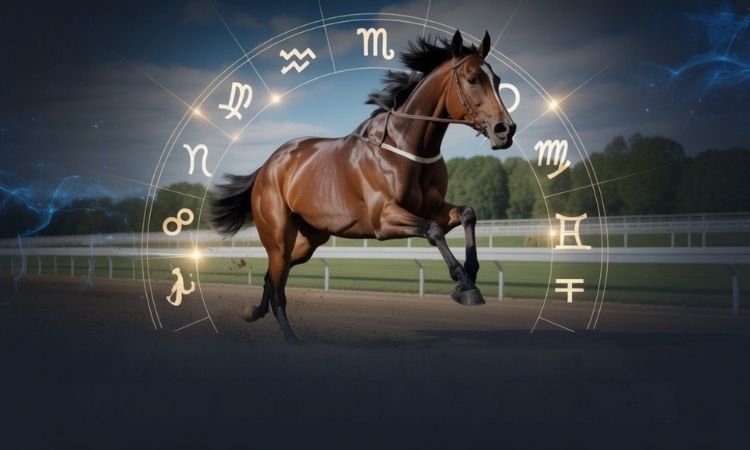
A horse’s birth chart helps interpret:
- Emotional temperament
- Competitive instinct
- Stress-handling ability
- Speed versus endurance inclination
- Adaptability to climate and track conditions
This deeper insight allows professionals to understand why a horse behaves a certain way, not just how it performs.
Also Read: The role of nutrition in racehorse performance
Racehorse Astrology in the Indian Racing Context
Indian racing conditions are unique. High humidity, seasonal monsoons, temperature swings, and long travel schedules can significantly impact a horse’s performance.
Racehorse astrology helps identify:
- Horses naturally suited to heat and humidity
- Horses that handle crowd noise and large Derby atmospheres
- Horses that recover quickly between races
- Horses that perform consistently across seasons
This makes astrology especially valuable when preparing horses for major events like the Indian Derby.
Introducing HAT Theory (Horse Astro Technique)
To bring structure and practical application to equine astrology, HAT Theory (Horse Astro Technique) was developed by Sudheer Chauhan.
HAT Theory combines:
- Vedic astrology
- Equine behavioral science
- Practical racing and training knowledge
Rather than predicting race outcomes, HAT Theory focuses on selection clarity, helping identify horses whose natural traits align with racing goals.
What HAT Theory Evaluates in a Derby Horse
HAT Theory looks beyond surface-level performance and examines deeper indicators that shape long-term success.
Temperament and Emotional Balance
Some horses remain calm under pressure, while others struggle in noisy or competitive environments. Astrology highlights emotional stability and stress response patterns.
Speed vs Endurance Orientation
Birth charts can indicate whether a horse is naturally inclined toward sprinting or long-distance racing, helping trainers structure appropriate conditioning programs.
Training Compatibility
Not every horse responds well to the same training intensity. HAT Theory helps identify training styles that align with the horse’s natural rhythm.
Environmental and Track Adaptability
Certain horses adapt better to turf, others to sand or mixed surfaces. Astrology helps predict environmental comfort zones early.
Why Racehorse Astrology Is Especially Useful for Selecting Derby Horses
Derby races demand peak performance under maximum pressure. Small differences in temperament, timing, and adaptability often separate winners from the rest.
Racehorse astrology supports Derby preparation by:
- Identifying mentally mature horses suitable for big-race pressure
- Reducing risk when selecting yearlings
- Helping owners avoid horses that peak too early or too late
- Supporting long-term race planning rather than short-term wins
Also Read: Top 6 Tips for Buy a Racing Horse
Who Benefits from Racehorse Astrology in India
Racehorse astrology is not limited to one group. It supports the entire racing ecosystem.
| Stakeholder | Key Benefit |
| Owners | Smarter selection decisions with reduced risk |
| Trainers | Better training alignment and performance consistency |
| Breeders | Early identification of high-potential yearlings |
| Stud Farms | Stronger long-term bloodline planning |
Blending Tradition with Deeper Insight
Racehorse astrology does not replace traditional evaluation methods. Instead, it complements them.
A smarter selection approach includes:
- Physical inspection
- Pedigree analysis
- Veterinary assessment
- Early performance observation
- Birth chart and temperament analysis
This combined model offers a clearer, more balanced understanding of a horse’s true potential.
Why India Is Ready for Racehorse Astrology
As Indian racing grows more competitive and globally connected, owners and breeders are seeking methods that offer clarity rather than guesswork.
Racehorse astrology aligns perfectly with this shift by:
- Reducing uncertainty in selection
- Supporting ethical and informed decision-making
- Focusing on pride, legacy, and long-term success
Also Read: The 5 Best Horse Race Tracks in UAE
Conclusion: A Smarter Way Forward for Derby Horse Selection
Selecting a Derby horse in India is about far more than speed or pedigree. It requires understanding temperament, mental strength, adaptability, and timing.
Racehorse astrology, supported by structured frameworks like HAT Theory, offers a deeper way to understand these critical traits. By integrating traditional methods with astrological insight, owners, breeders, and trainers can make more confident, informed decisions.
In a sport where pride, honor, and legacy matter deeply, racehorse astrology provides a smarter path to identifying true champions.
Also Read: The 5 Best Horse Racing Tracks in India
FAQs
What is racehorse astrology?
Racehorse astrology studies a horse’s birth chart to understand temperament, emotional strength, adaptability, and racing potential beyond physical traits.
Is racehorse astrology useful for Indian Derby selection?
Yes. Indian Derby races involve high pressure, travel, and varied climates. Astrology helps assess mental readiness and environmental suitability.
Can astrology help when selecting yearlings?
Yes. Since yearlings lack race history, astrology offers early insight into future potential and temperament.
Does racehorse astrology replace traditional selection methods?
No. It complements pedigree, conformation, and performance analysis by adding deeper behavioral insight.